Spirit vs. Shouting - My Day with the Monks

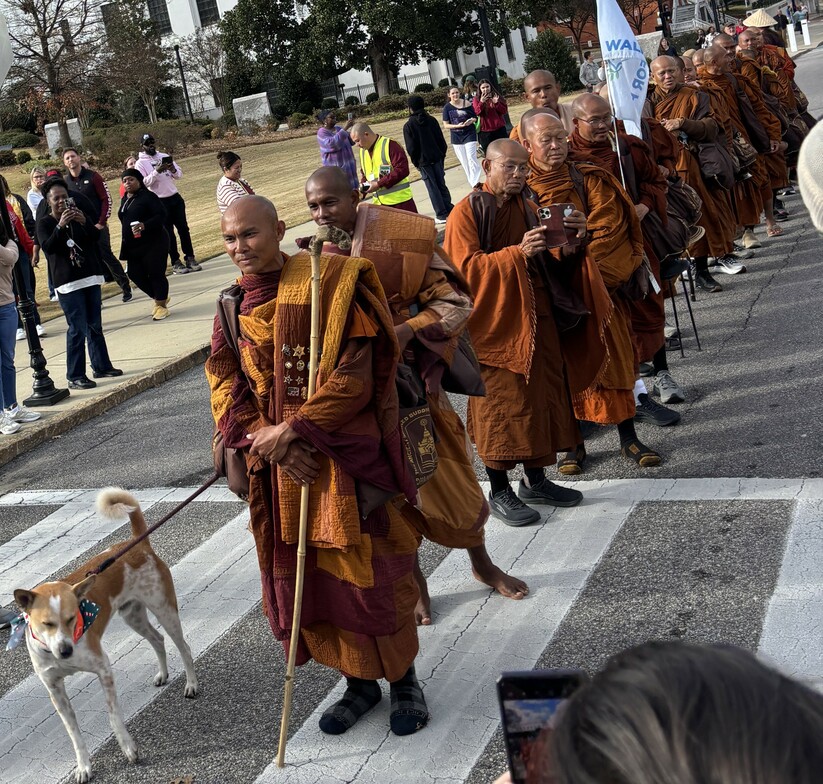
On December 23, a group of monks came through our city on their Walk for Peace. I joined around 300 other people who gathered at City Hall to hear them speak and then walk alongside them to the Capitol building. It was one of those rare moments where the air itself felt hushed and attentive—where people from many backgrounds stood shoulder to shoulder, listening to words about compassion, nonviolence, and the long, patient work of peace. I left feeling lighter, steadier, and unexpectedly hopeful.
As we walked, however, that feeling was interrupted. Along the route, a street preacher stood with a loudspeaker, shouting over the procession: “Buddha won’t save you. Only Jesus will save you.” His voice cut through the quiet. The calm presence of the monks and the reverent mood of the crowd dissolved into tension and discomfort. People in the crowd booed. The moment fractured.
What rose up in me wasn’t anger so much as frustration and a deep sadness, along with a question: Sir, how many souls do you think you saved today by telling these men they are going to hell? And maybe the harder question—who is being a better representative of Christ in this moment?
I say this as a Christian, someone who takes Jesus seriously. Watching that scene unfold forced me to wrestle with what evangelism actually means. If the goal is to draw people toward Christ, what does shouting condemnation accomplish? I suspect more people walked away that day more certain they wanted nothing to do with Christianity than suddenly eager to embrace it.
Meanwhile, the monks—without shouting, without threats, without claiming moral superiority—embodied patience, humility, and peace. They invited reflection simply by how they walked and spoke. It was clear they felt love, respect, and acceptance for every person in that crowd.
If evangelism does not look like love, curiosity, and deep respect for others, then perhaps it’s time to ask whether we’ve confused being loud with being faithful.
What lingered with me most afterward was the contrast. One approach relied on volume and fear; the other trusted quiet presence and shared humanity. Jesus, after all, rarely coerced belief. He told stories, shared meals, touched the untouchable, and let people come to their own recognition of truth. That feels far closer to what I witnessed among the monks and the crowd that followed them.
As Christians, I think we should be brave enough to ask hard questions about our methods, not just our message. If our witness pushes people away from love, mercy, and peace, then we should pause and listen. Perhaps true evangelism begins not with declaring who is damned, but with walking humbly, loving generously, and leaving room for the Spirit to do what shouting never can.